Jonas Becker · 15 September 2026
Archaeologists Uncover Roman Settlement Clues Just Steps from Harefield Village Green
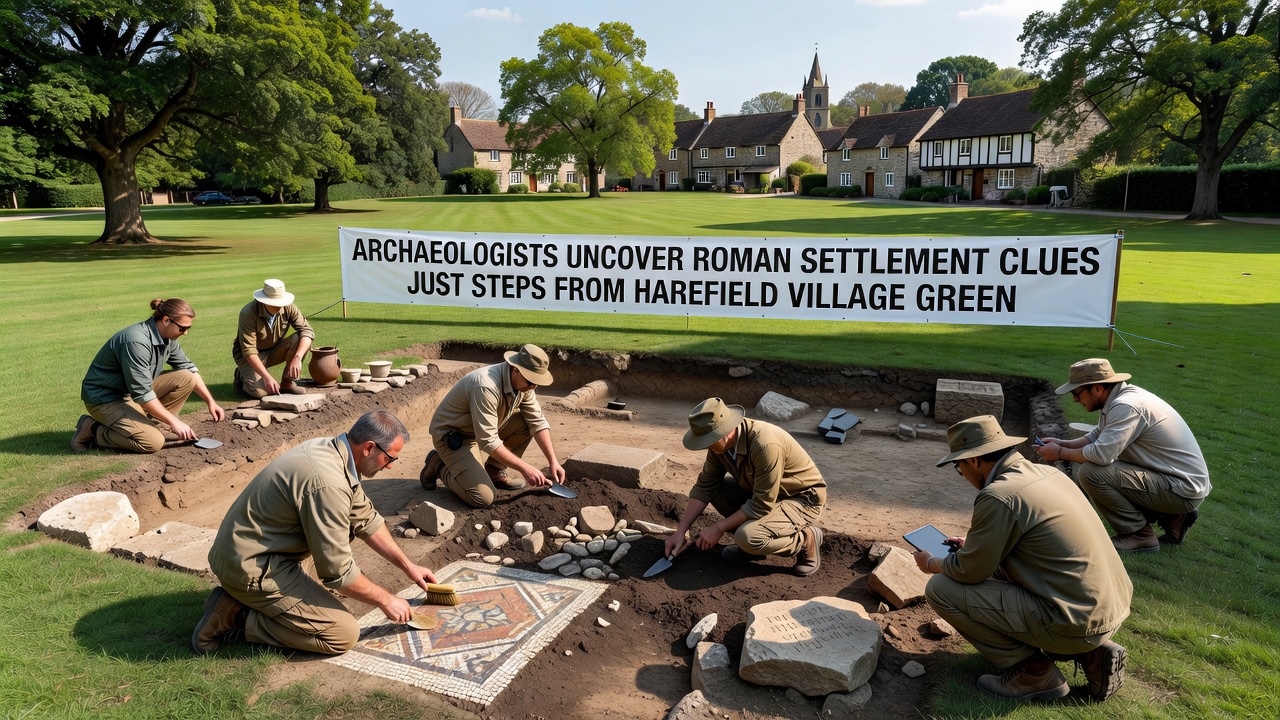
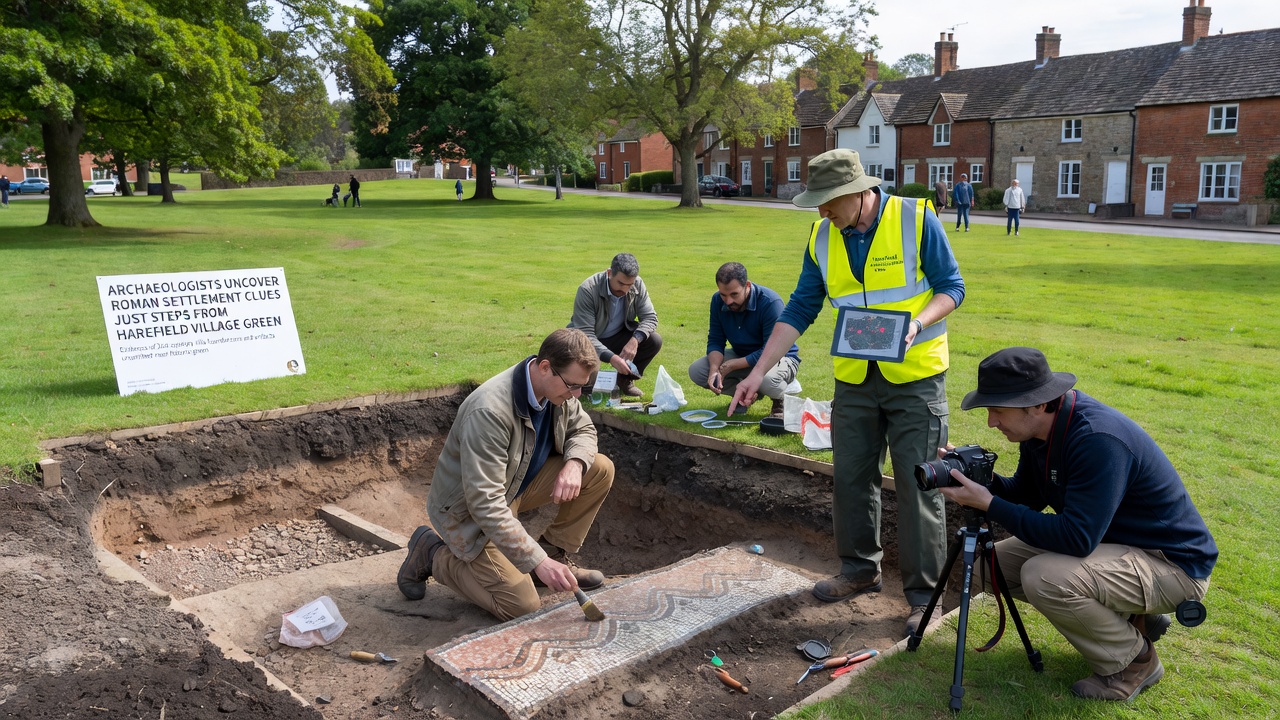
Archaeologists working in a field adjacent to Harefield Village Green have identified traces of a Roman settlement that include pottery fragments, building foundations, and metal objects dating from the first to fourth centuries AD, and these finds emerged during a routine survey ahead of local infrastructure assessments in late 2025.
The Site and Its Location
Harefield sits in the London Borough of Hillingdon, and the excavation area lies within walking distance of the village green where community events occur regularly, while the proximity allowed teams to integrate findings with existing records from the Museum of London Archaeology without disrupting public access to the green itself.
Researchers mapped the site using geophysical surveys that detected subsurface anomalies consistent with Roman-era roads and enclosures, and further test pits confirmed the presence of layered deposits containing Samian ware pottery alongside local coarse wares that point to both imported goods and domestic production.
Key Discoveries from the Digs
Among the recovered items are fragments of amphorae used for transporting olive oil and wine, several bronze coins bearing images of emperors such as Hadrian and Antoninus Pius, and sections of hypocaust tiles that suggest a modest villa or bath structure once stood nearby, while soil samples revealed charred grain remains that indicate agricultural activity in the vicinity.
One trench yielded a small hoard of iron tools including sickles and a pruning hook, objects that align with patterns observed at other Roman rural sites across southern Britain, and these artifacts underwent conservation at a facility linked to the University of Reading before cataloguing.
Historical Context and Regional Connections
Roman occupation in the area around modern Harefield formed part of the broader network supplying Londinium, and evidence from nearby sites such as those documented by Historic England shows similar settlement patterns where villas supported farming communities along routes connecting to Watling Street, yet the Harefield location adds detail to the western extent of that system.
Comparative analysis with finds from the Continent appears in reports from institutions like the Archaeological Institute of America, which tracks trade networks that moved goods from Gaul and the Mediterranean into Britain, and the Harefield pottery styles match several of those documented sequences.
Excavation Methods and Team Efforts
The project employed a combination of open-area excavation and targeted sampling, while volunteers from local history groups assisted under supervision from professional archaeologists, and this approach allowed for systematic recovery of small finds such as glass beads and bone pins that might otherwise have been overlooked.
Data loggers recorded environmental conditions throughout the dig to preserve organic materials, and post-excavation analysis included radiocarbon dating of charcoal samples that placed activity peaks during the second and third centuries AD, consistent with wider economic expansion in the province.
Plans Moving Forward Including September 2026
Following the initial phase, arrangements call for expanded geophysical work and public open days scheduled through 2026, with a dedicated exhibition of select artifacts planned for display at a Hillingdon venue in September 2026 to coincide with the annual heritage festival, and preliminary arrangements involve collaboration with the London Archaeological Archive to ensure long-term storage and research access.
Community briefings have outlined how the discoveries integrate with existing village records, and further seasons of work will focus on delineating the settlement boundaries while minimizing impact on the adjacent green space.
Conclusion
The Harefield findings contribute measurable data to understandings of Roman rural life in the Thames Valley, and ongoing analysis will refine chronologies for the region as results from the 2025-2026 fieldwork seasons become available through peer-reviewed channels.