Jonas Becker · 27 October 2026
Harefield's High Street Shopkeepers Adapt Inventory and Hours to Match New Cycle Route Commuter Patterns
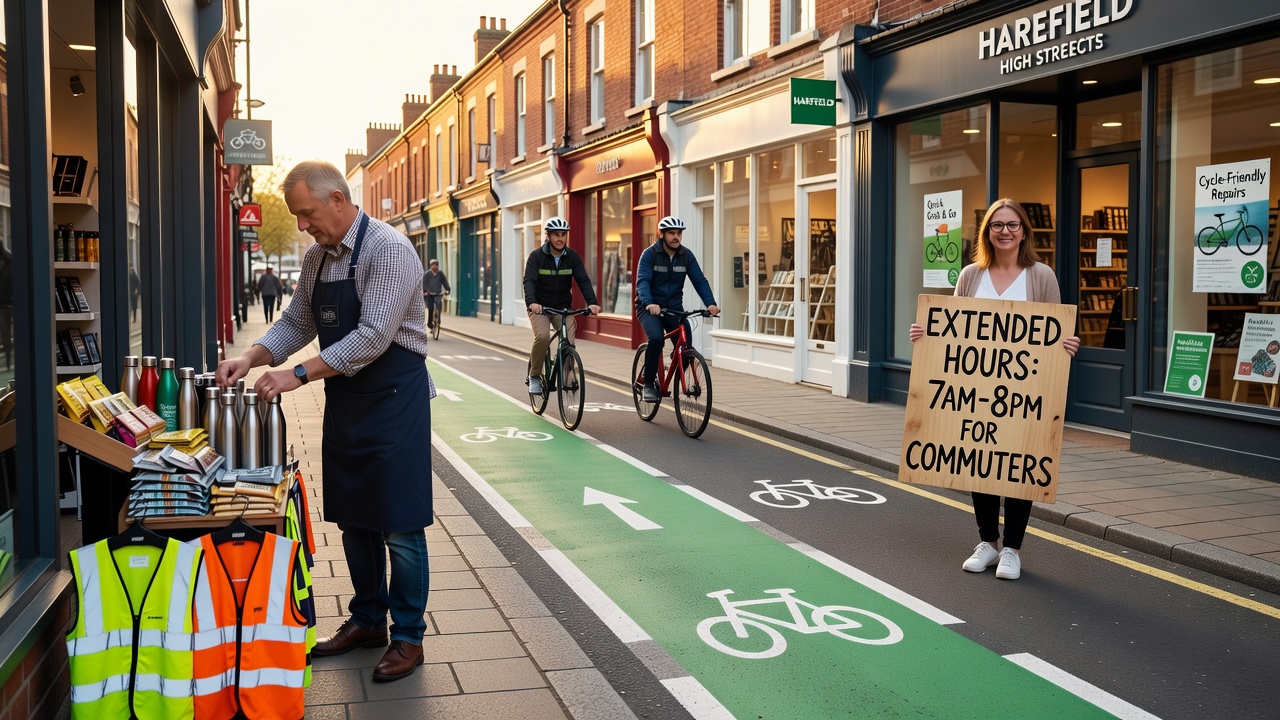
Shopkeepers along Harefield's High Street began adjusting their stock and opening times after the completion of a dedicated cycle route that links the village to nearby employment centres; the changes started appearing in early 2025 and continued through October 2026 as daily commuter numbers stabilised. Local businesses tracked an increase in foot traffic from cyclists who previously bypassed the street in favour of faster road routes, and several owners reported that morning and evening peaks now account for a larger share of daily sales than before the route opened.
New Cycle Infrastructure and Shifting Commuter Flows
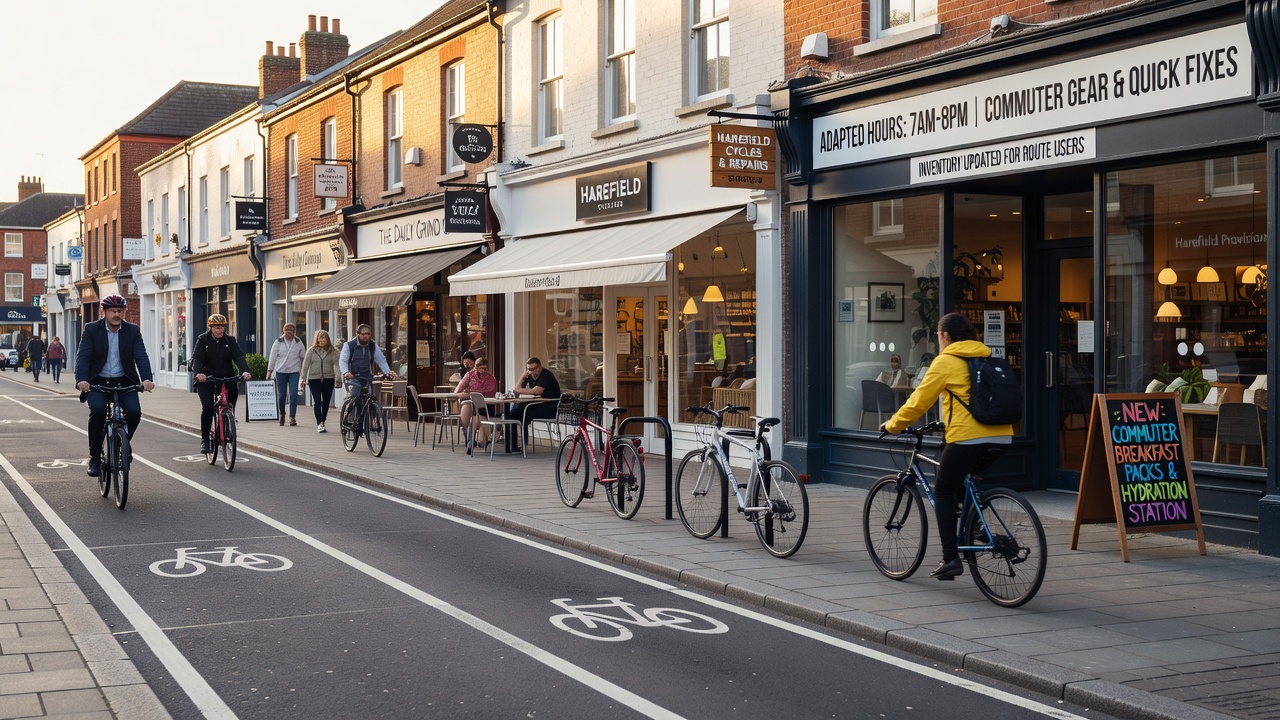
The route, developed as part of a regional active-travel programme, added protected lanes and improved junctions that reduced travel time for cyclists between Harefield and industrial estates to the south; transport counts compiled by the local authority recorded a 34 percent rise in weekday bicycle movements through the High Street by the summer of 2026. Retailers noticed that many of these commuters stopped for quick purchases of snacks, drinks and basic maintenance items rather than completing longer shopping trips on foot or by car. One coffee shop extended its opening hour from 7 a.m. to 6:30 a.m. to capture the earliest arrivals, while a newsagent added a rack of energy gels and puncture-repair kits near the counter after observing repeated requests.
Inventory Adjustments Across Multiple Outlets
Stock lists evolved to reflect the practical needs of regular riders. A general store replaced part of its tinned-goods display with lightweight snacks and hydration products, and a pharmacy increased its range of cycling gloves and reflective accessories; sales data from both businesses showed these categories growing by roughly one-fifth within six months of the route opening. Another retailer introduced a small selection of e-bike charging cables after several customers asked whether such items were available locally. These shifts occurred without major capital investment, as most owners reordered existing suppliers rather than sourcing entirely new product lines.
Opening Hours and Staffing Changes
Hours of operation also moved to align with commuter schedules. Three premises now open thirty minutes earlier on weekdays, and two close later on Thursday and Friday evenings to serve return journeys. Staff rotas were reorganised so that additional help is present during the 7–9 a.m. and 5–7 p.m. windows; payroll records indicate that total weekly hours worked remained broadly stable because quieter midday periods required fewer people on the floor. A bakery began offering pre-ordered breakfast rolls collected by cyclists en route, a service that accounts for approximately 15 percent of its weekday morning revenue according to till summaries shared with the local business association.
Supporting Data and Broader Retail Context
Figures released by the Department for Transport show that protected cycle infrastructure in similar UK settlements has produced comparable retail footfall gains within the first eighteen months. Industry reports from the British Retail Consortium note that convenience outlets located on active-travel corridors often record higher average transaction values from cyclists than from traditional pedestrian customers, largely because riders purchase portable, high-margin items. In Harefield these patterns appear consistent across independent traders rather than concentrated in any single category, suggesting the route has broadened the customer base without displacing existing trade.
Conclusion
By October 2026 the cumulative effect of these modest adjustments had produced measurable changes in both product mix and daily rhythm along the High Street; businesses that aligned inventory and hours with the new commuter flows reported steadier weekday revenue streams than those that maintained previous patterns. The adaptations remain incremental and reversible, allowing owners to respond further as usage data continues to accumulate.