Freya Vogel · 13 October 2026
Harefield's Volunteer Archivists Digitize Forgotten Village Ledgers to Uncover 19th Century Trade Patterns
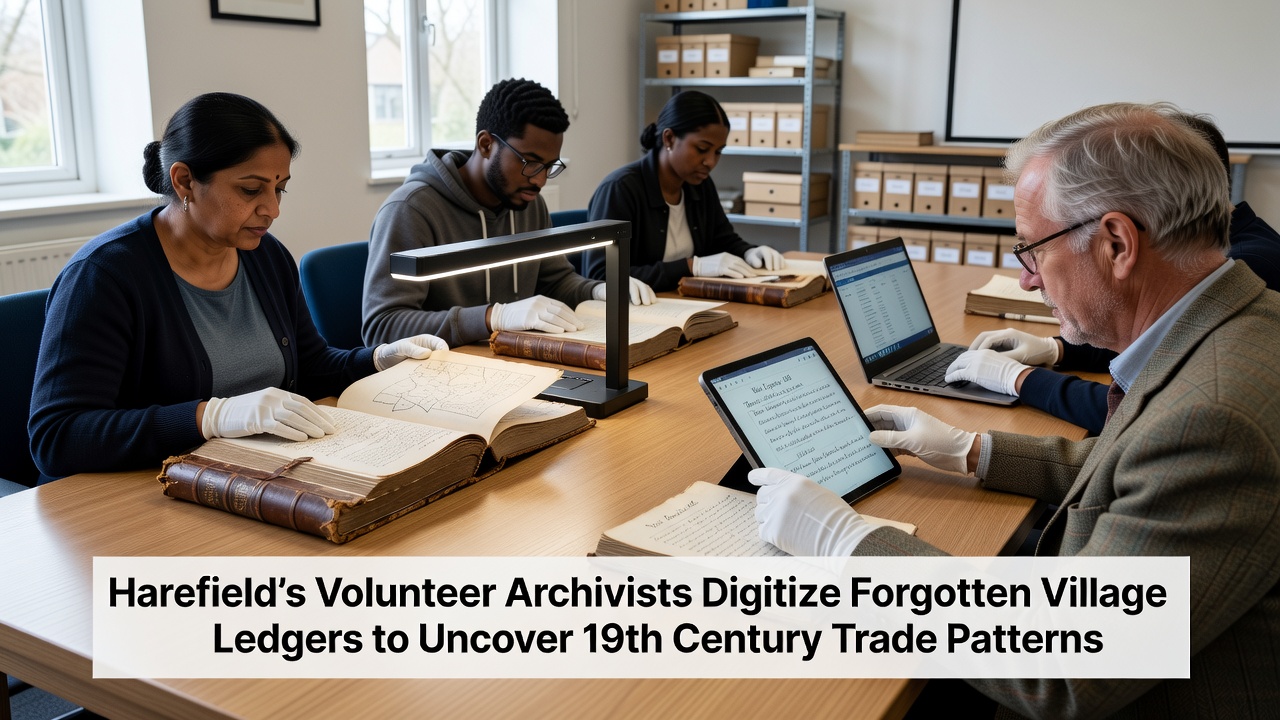
Volunteers in Harefield have spent recent months scanning and transcribing a collection of merchant ledgers that date back to the early 1800s, and the work has begun to reveal specific trade routes and commodity flows that connected the village to larger regional markets. The project started in late 2025 when local historians discovered the ledgers stored in the attic of a former coaching inn, and by October 2026 the team had processed more than half of the surviving volumes.
Origins of the Ledger Collection
The ledgers belonged to several families who operated general stores and small-scale export businesses along what later became the Grand Union Canal corridor, and entries show regular shipments of wheat, barley, and wool to London wholesalers while recording incoming cargoes of coal, iron tools, and imported tea. Researchers cross-referenced the dates with known canal toll records and found that Harefield traders maintained consistent traffic even during periods of economic fluctuation in the 1840s.
Digitization Process and Technical Approach
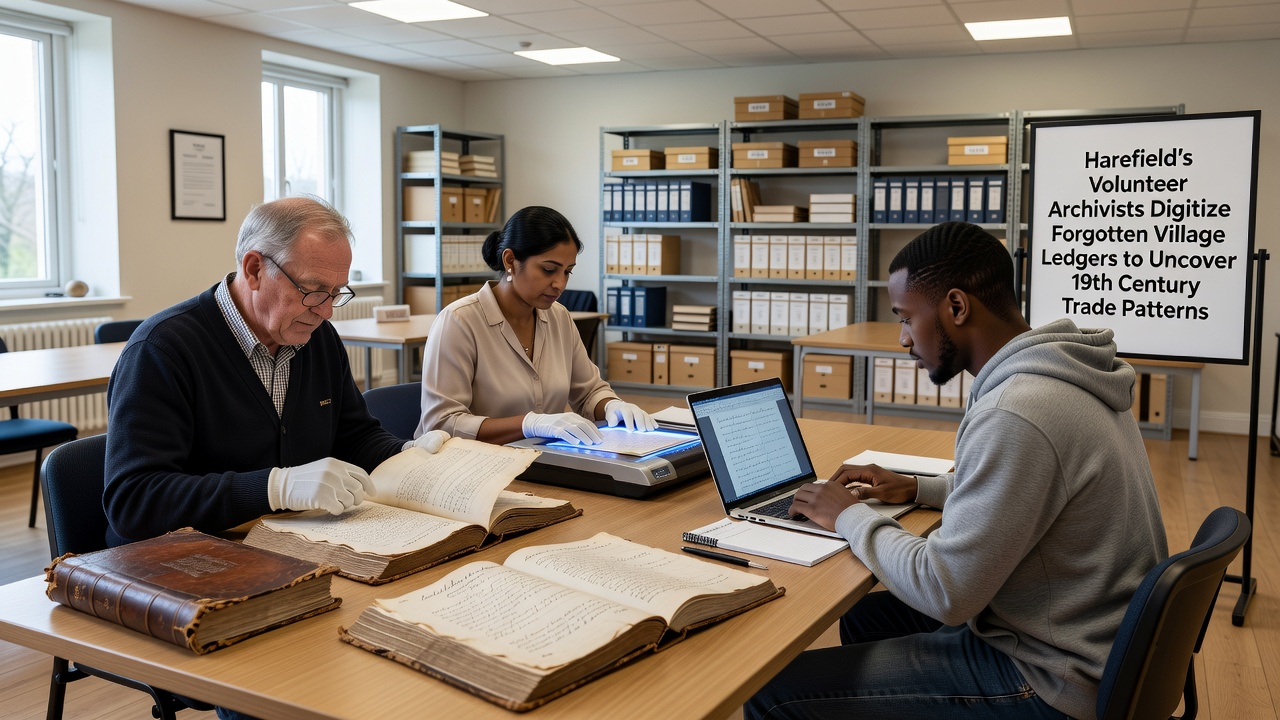
Volunteers use flatbed scanners and open-source transcription software to create searchable digital files, and each page receives metadata tags that include commodity type, origin port, and seasonal pricing notes. The group meets twice weekly in the village hall where they compare entries against contemporary newspaper shipping notices to verify quantities and correct spelling variations common in handwritten accounts.
One ledger from 1837 lists repeated purchases of flax from Baltic ports routed through Hull, and another from 1852 documents sales of locally milled flour to Birmingham markets via the newly completed railway link. These details allow historians to map seasonal peaks that aligned with harvest cycles and canal maintenance schedules rather than relying solely on national aggregate statistics.
Key Trade Patterns Identified So Far
Data extracted so far indicates that Harefield merchants shifted from canal to rail transport more gradually than previously assumed, with some grain shipments continuing by water into the 1860s because lower tolls offset slower delivery times. Entries also record occasional imports of American cotton goods that arrived via Liverpool before reaching local drapers, a pattern that matches broader transatlantic trade records held at the US National Archives.
Additional findings show price fluctuations tied to weather events, such as a sharp rise in potato costs following the 1846 harvest failures, and these local figures provide granular evidence that complements national reports issued by the Board of Trade. The volunteers have also identified repeated transactions with Irish linen suppliers, which adds a cross-channel dimension to the village's commercial network.
Community Involvement and Training
Local residents without prior archival experience receive training from retired librarians who volunteer their time, and several participants have learned to read secretary hand script that appears in the earliest volumes. Schools in the district have begun incorporating sample ledger extracts into history lessons, allowing students to calculate average transport costs and compare them with modern logistics data.
The project maintains a public online database hosted on the village website, and users can search by commodity or merchant name while viewing high-resolution page images alongside transcribed text. Updates released in October 2026 added an interactive map that plots individual shipment routes based on the transcribed destinations.
Broader Historical Context
Trade patterns uncovered in the Harefield ledgers align with studies conducted by the National Archives of Australia on 19th-century commodity exchanges between Britain and its colonies, particularly in wool and grain movements. Observers note that the village records fill gaps in understanding how small inland settlements participated in global supply chains long before the dominance of rail networks.
Next Steps for the Archive Team
Volunteers plan to expand the digitization effort to include account books from neighboring parishes, and they have applied for a grant that would fund additional scanning equipment. Partnerships with regional museums are under discussion to create a traveling exhibition that displays selected ledger pages alongside artifacts from the same period.
Conclusion
The ongoing work demonstrates how community-led digitization can recover detailed economic histories that national collections often overlook, and the Harefield project continues to add verified data points to the wider picture of 19th century British trade. As more volumes become searchable, researchers expect further refinements to existing models of regional commerce during the industrial era.